The Age of AI Agents: Building Future-Ready Digital Workforces
# The Age of AI Agents: Building Future-Ready Digital Workforces
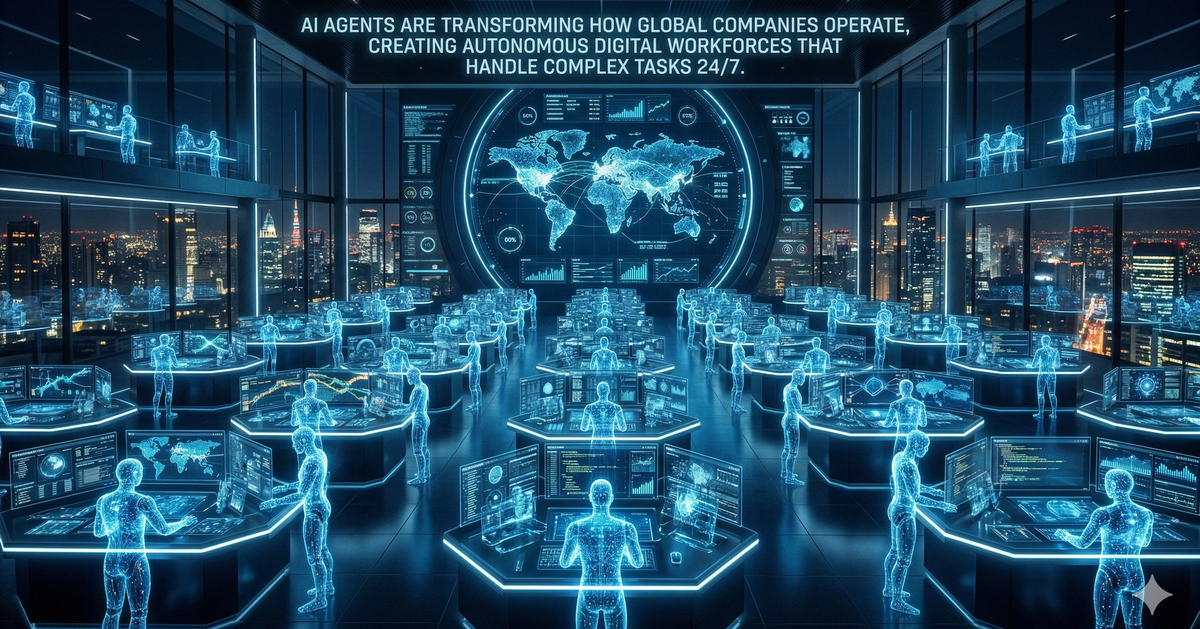
The corporate landscape is undergoing a seismic shift as AI agents emerge as the new digital employees of global enterprises. These intelligent systems are no longer just tools—they're becoming integral partners in business operations, capable of handling complex tasks, making decisions, and even learning from their experiences.
Understanding AI Agents in Enterprise Context
AI agents represent a significant evolution from traditional automation tools. Unlike simple bots that follow predetermined scripts, these intelligent systems can:
• Autonomous Decision Making: Process complex information and make contextual decisions without human intervention
• Continuous Learning: Adapt and improve their performance based on interactions and outcomes
• Multi-modal Communication: Interact through text, voice, and visual interfaces seamlessly
• Cross-platform Integration: Work across multiple systems and databases simultaneously
Global companies like Microsoft, Google, and Salesforce are already deploying AI agents to handle customer service, sales qualification, data analysis, and even strategic planning tasks.
Key Applications Transforming Business Operations
Customer Service Revolution
AI agents are redefining customer support by providing:
- 24/7 availability across multiple time zones
- Instant access to comprehensive knowledge bases
- Personalized responses based on customer history
- Seamless escalation to human agents when needed
Sales and Marketing Automation
Intelligent agents are now capable of:
- Lead qualification and scoring
- Personalized email campaign management
- Real-time competitor analysis
- Dynamic pricing optimization
Internal Operations Enhancement
- Document processing and analysis
- Meeting scheduling and coordination
- Compliance monitoring and reporting
- Resource allocation optimization
Implementation Framework for AI Agents
Successful AI agent deployment requires a structured approach:
1. Strategic Planning Phase
• Identify Use Cases: Map specific business processes suitable for agent automation
• Define Success Metrics: Establish clear KPIs for measuring agent performance
• Resource Assessment: Evaluate technical infrastructure and human resources needed
2. Technical Architecture
class EnterpriseAIAgent:
    def __init__(self, domain_knowledge, integration_apis):
        self.knowledge_base = domain_knowledge
        self.integrations = integration_apis
        self.learning_module = ContinuousLearning()

    def process_request(self, user_input):
        context = self.analyze_context(user_input)
        response = self.generate_response(context)
        self.learning_module.update_from_interaction(user_input, response)
        return response
3. Integration and Deployment
• API Connectivity: Ensure seamless integration with existing enterprise systems
• Security Protocols: Implement robust data protection and access controls
• Monitoring Systems: Deploy comprehensive logging and performance tracking
Overcoming Implementation Challenges
Data Quality and Governance
AI agents are only as good as the data they're trained on. Companies must:
- Establish clear data governance policies
- Implement regular data quality audits
- Create feedback loops for continuous improvement
Change Management
Successful adoption requires:
- Employee Training: Educate staff on working alongside AI agents
- Cultural Adaptation: Foster a collaborative human-AI work environment
- Process Redesign: Restructure workflows to maximize AI agent effectiveness
Ethical Considerations
- Transparency in AI decision-making processes
- Bias detection and mitigation strategies
- Clear boundaries for AI agent authority and responsibilities
The Future of AI-Powered Workforces
As we look ahead, several trends are shaping the evolution of AI agents:
Enhanced Cognitive Capabilities
- Advanced reasoning and problem-solving abilities
- Emotional intelligence and empathy in customer interactions
- Creative content generation and strategic thinking
Industry-Specific Specialization
- Healthcare AI agents for patient care coordination
- Financial services agents for risk assessment
- Manufacturing agents for predictive maintenance
Collaborative Intelligence
The future workplace will feature human-AI collaboration where:
- Humans focus on creative and strategic tasks
- AI agents handle routine and data-intensive work
- Both work together to achieve superior outcomes
Getting Started with AI Agent Implementation
For companies ready to embrace this transformation:
- 1.Start Small: Begin with pilot projects in non-critical areas
- 2.Measure Impact: Track performance metrics and ROI carefully
- 3.Scale Gradually: Expand successful implementations across the organization
- 4.Invest in Training: Develop internal capabilities for AI agent management
- 5.Partner Strategically: Work with experienced AI development companies
The age of AI agents as digital partners is not a distant future—it's happening now. Companies that embrace this transformation today will have significant competitive advantages tomorrow. The key is to approach implementation strategically, focusing on real business value while preparing the organization for an AI-integrated future.
At Onedaysoft, we're helping businesses navigate this transformation by building custom AI agent solutions that integrate seamlessly with existing operations. The future of work is collaborative intelligence—are you ready to be part of it?